A satellite image released this week by NASA shows the extent of haze currently blanketing much of Southeast Asia. The photo captures plumes of smoke emerging from fires burning in the peatlands of Sumatra and Indonesian Borneo. The smoke blows west into what looks like thick clouds over both islands as well as neighboring Singapore and Malaysia. Choking haze is causing widespread hospitalizations, interfering with transportation, and inflaming political tensions between Indonesia and Singapore.
In class we learned about the slash and burn agriculture. Read this storyto see about the modern-day effects on this type of farming in countries that are close to where we live. Here are 5 Things to Know About the Haze.
Rajasthan, India (CNN) The record-breaking drought in California has made the headlines. But in Rajasthan, the driest region of India, water scarcity is a way of life. Women and children walk miles to get water and clean dishes with sand to conserve it. In recent years, the problem has escalated. More than half of Rajasthan’s drinking water does not meet the World Health Organization’s standards due to high levels of fluoride and salt. In some villages, wells have dried up, leaving people dependent on water brought in by tankers.
I saw this story on CNN Heroesthis morning and it made me think about what we have been learning in class – the importance of water in the creation of the first villages and civilizations. Watch the video and read the storyto learn about Bhagwati Agrawal and the work he has been doing in India for over 12 years. I will tag any news articles with ‘News & Features’ if I find something related to what we are doing in class. Please send me any interesting articles or videos you find, so that we can share with the class.
Watch several of the short video clips on Out of Eden Learn and Out of Eden Walk. Think about:
Who is Paul Salopek?
What is the purpose of his journey?
What is slow journalism?
What is Out of Eden Learn?
What do you think will make Out of Eden Learn interesting?
What questions do you have about Out of Eden Learn?
Share your ideas in the comment section! Due date: Friday, September 25th (G/H) and Saturday, September 26th (B/D). All comments will be moderated and published by Saturday night at 8:00pm.
We are currently learning about Sumer, the first civilization, in southern Mesopotamia. Sumer was made up of several city-states, including Kish, Nippur, and Ur. Our current lesson also focuses on the traits of a civilization.
Screenshot of Euphrates River from Google Maps. You can see how fertile (green) the land is near the river (vs. the desert).
Screenshot of Tigris River in Iraq from Google Maps.
Mesopotamia is a name for the area of the Tigris–Euphrates river system, corresponding to modern-day Iraq, Kuwait, the northeastern section of Syria, as well as parts of southeastern Turkey and of southwestern Iran.
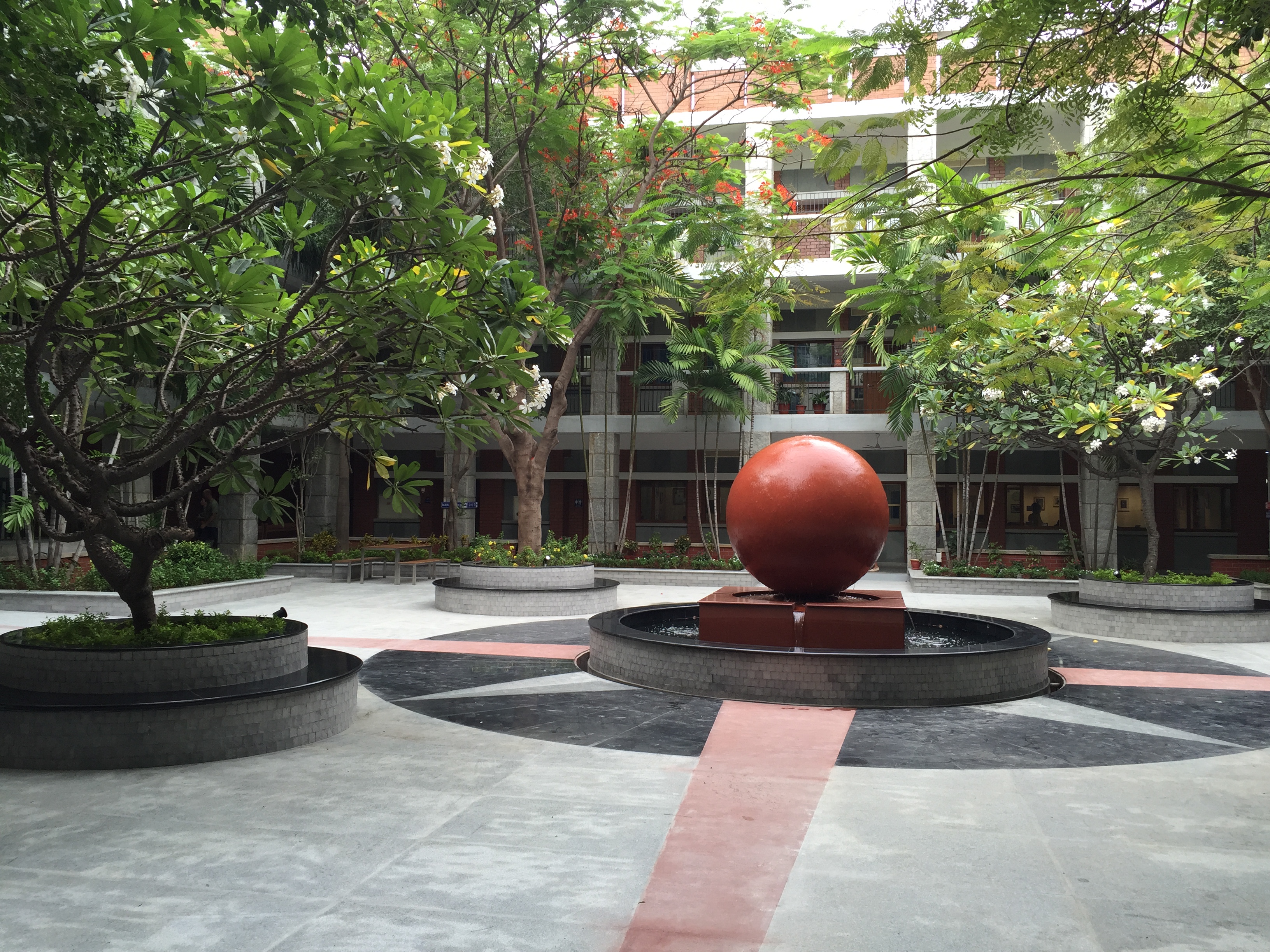
The official UN International Peace Day is September 21, but AISC will celebrate it on Friday, September 18. The UN created this day to strengthen the ideals of peace. This year’s theme for the day is “Partnerships for Peace – Dignity for All.” There will be a Graffiti Wall on the outside of the High School CIC facing the fountain courtyard. Students, parents, faculty – all community members – can share their thoughts, images, examples of what “Dignity for All” means to them. This wall will be up and ready starting on Tuesday, September 15. Envision a world of peace – what would it look like? How can we work toward achieving this?
The timing of the end of our early humans unit coincides with the news of the discovery of ancient skeletons in Africa. This story is all over the news and social media. I have included some videos from the news and some articles with images. Scientists have discovered a new human-like species in a burial chamber deep in a cave system in South Africa. The discovery of 15 partial skeletons is the largest single discovery of its type in Africa. The researchers claim that the discovery will change ideas about our human ancestors.
Image source: OCTOBER 2015 ISSUE OF NATIONAL GEOGRAPHIC MAGAZINE. Photo by Mark Thiessen/National Geographic
Image source: National Geographic
Please comment and write about anything interesting you read or heard and/or one wondering or question you might have about this discovery. Here are some articles with further stories and images:
Many students have asked me to share the Otzi documentary we watched in class. Here is the playlist. The documentary is the third video. If you find Otzi, hunter-gatherer, early farming, or other related early human websites or videos, please share the link with me. I am always looking for new resources. Thanks!
Image from The True Size Of… (screenshot by Mr. Martin)
Check out a new interactive map project, The True Size Of….It lets you visualize how big countries really are, rather than how big they appear when distorted on a map. Created by James Talmage and Damon Maneice, the site uses Google Maps to show the actual size of different countries and landmasses. You can drag countries around the map, and they’ll dynamically shift to show how big they are relative to each other. For example, look how the United States, China, and India would all almost fit into Africa. It’s an interesting site. Take a look at it and compare India and your country to other regions of the world.
In our early human unit, you learned about the agricultural revolution, the name given to the shift or move from food gathering to food raising/growing. Early humans learned how to domesticate plants for food and animals that gave them food and clothing. People made harpoons, needles, and other tools from animal bones. New tools and methods of farming led to the invention of new tools like hoes to loosen soil, sticks to dig holes, and sickles to harvest grain. New communities and villages developed near fresh water sources, like rivers, where people built irrigation canals to move water from rivers to fields.
Happy birthday to the following students celebrating birthdays in September: Taehyeon (9/14), Sohum 9/22), and Aditi (9/30). If we made any errors or forgot someone, let us know. Have a fantastic day! – Mr. Martin and Ms. Jaya
This playlist features some videos that go along nicely with what you are reading in chapter 2, lesson 2 (pages 58 – 62). How did farming change the way people lived? What farming techniques were part of the agricultural revolution?
We are learning about early human culture and the development of art. There are many examples of ancient cave paintings, particularly in France and Spain. Watch the video clip and also check out website for the Lascaux Cave Paintingsin France (also mentioned in pages 6-7 in your textbook). Click ‘visit the cave’ to enter this cool website that features some really amazing early art. Women made most of the oldest-known cave art paintings, suggests a new analysis of ancient handprints. Most scholars had assumed these ancient artists were predominantly men, so the finding overturned decades of beliefs.
Think about: What does this art tell us about early humans?
A civilization is made up of many parts. We will use G.R.A.P.E.S. to remember them. The GRAPES acronym in Social Studies means:
Geography Religion Achievements Politics Economy Social structures
We are currently learning about historical themes (pages xxii – xxiii in your textbook). The themes listed in the book are the same as GRAPES. Click on this link to learn more about GRAPES.
To help you understand the themes you will be learning about this year, consider these questions and comment on one or more of them:
Geography: Is your town or city near a lake, ocean, or mountains? What is the weather like? How do the landscape and weather affect the way you live?
Religion or Belief Systems: As you are growing up, how do you learn what are the right and wrong ways of behaving? What people or groups taught you those things?
Politics or Government: In our school, what would happen if every student could come to class whatever time he or she wanted? Leave class whenever he or she wanted? Talk out loud anytime, even during tests?
In addition to learning about tools historians use, we have learned the following terms: archaeologist, anthropologist, artifact, and fossil (chapter 1, lesson 3). A few reminders: Please bring your computer to each class and leave your notebook in our classroom, unless you have homework. All students should be following the blog and know how to post a comment. Students should also know how to access our Google homework calendar from Moodle. Here are two screencasts I have created this week to review these things:
An example of a brainstorm to the question: What is Social Studies?
Is, Does, Says, and Isn’t – A great Social Studies class!
Here are some samples of work we have done during the first week of school. We have talked about: 1) class rules and expectations, 2) how we can make our class a great one (working agreements), 3) what social studies is, and 4) tools historians use to learn about the past – primary and secondary sources. The video playlist below and the images above are things that will help remind you of work we have done in class. All students have a textbook. Please keep your textbook home all year. We have a class set of textbooks we can use. All students should have a spiral notebook for social studies and an accordion folder that can be used for all 6th grade classes.
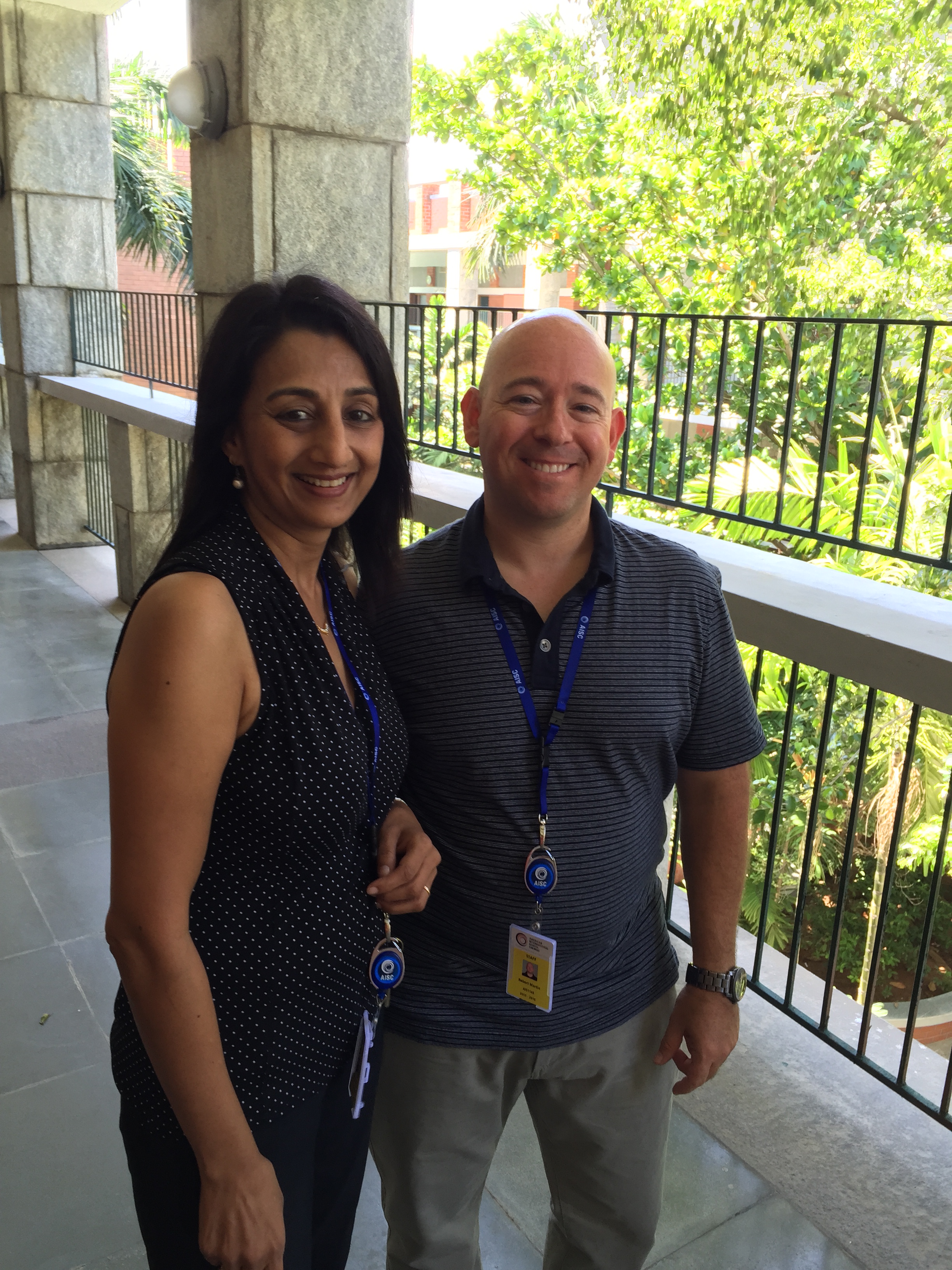
Ms. Jaya, EAL teacher, and Mr. Martin, Social Studies (Photo by Rob Martin)
Welcome back to the 2015-2016 school year. We are excited to be your teachers for social studies. We look forward to getting to know you and hearing about your summer vacation. Over the next week, we will introduce our course units and our expectations. Let’s have a great year.
Hinduism, Buddhism, Christianity, Judaism, and Islam are five of the biggest religions in the world. Over the last few thousand years, these religious groups have shaped the course of history and had a profound influence on the trajectory of the human race. Through countless conflicts, conquests, missions abroad, and simple word of mouth, these religions spread around the globe and forever molded the huge geographic regions in their paths. Watch this short video from Alex Kuzoian that appeared in Business Insider this week.
"My mission in life is not merely to survive, but to thrive; and to do so with some passion, some compassion, some humor, and some style."
- Maya Angelou
Recent Comments