Archive | Mesopotamia RSS feed for this section
One of the favorite activities for Mesopotamian school students was copying proverbs, or wise sayings (see page 102 in your textbook). Scribes collected and organized hundreds of these popular sayings on tablets. Many are still popular today. Here are a few:
Mesopotamia vs Egypt
15 Feb
Check out this really cool history video comparing the ancient civilizations of Mesopotamia and Egypt. This video come from the Utah System of Higher Education and Dr. Nancy Ross. Enjoy!
Hanging Gardens of Babylon and Ishtar Gate
5 Dec
Here are two videos: 1) the Hanging Gardens of Babylon and 2) the Ishtar Gate (2). I hope you find them interesting and helpful. They are meant to support what you have read in chapter 4, lesson 2. Post a comment about one or two interesting facts you learned from one of the videos.
Assyrian Empire
3 Dec
We will wrap up the unit on Mesopotamia this week and discuss the Assyrians. Next week on Wednesday (12/11), you will have your final unit test for Mesopotamia. A study guide is in the Mesopotamia unit folder on Moodle. Take a look at this website to learn more about warfare in Mesopotamia. Read the story about the Siege of Lachish and then look at the “Explore” and “Challenge” links, which are very interesting. If you are looking for more sites related to Mesopotamia, check out these links:
Dig into History: Mesopotamia – interactive website with fun activities
Why did Mesopotamia collapse?
Gilgamesh, the Hero
25 Nov
Photo Credit: SCTroyenne via Compfight cc
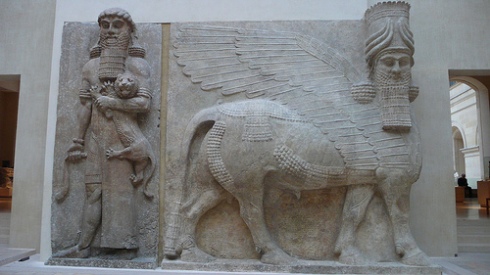
In class this week, we are learning about the Epic of Gilgamesh, the great surviving work of Mesopotamian literature. Gilgamesh is a demigod of superhuman strength who built the city walls of Uruk to defend his people from external threats. He is usually described as two-thirds god and one-third man. The animated video below is a nice introduction and overview to Gilgamesh. Enjoy!
Epic (noun) – a long poem, typically one derived from ancient oral tradition, narrating the deeds and adventures of heroic or legendary figures or the history of a nation. Synonyms: story, saga, legend, romance, chronicle, myth, fable, tale, heroic poem.
Hammurabi’s Code of Law
21 Nov
Before Mesopotamian civilization, the world was without laws. Hammurabi, a Mesopotamian King, came along and wrote down a set of laws. It was this set of the laws that began to introduce some order and justice in the world. A group of people without a written set of laws is no civilization at all, therefore, Hammurabi’s Code was a major step towards establishing Mesopotamia as a real civilization. We have been discussing some of the laws in class. We have discussed the basic principle: “an eye for an eye; tooth for a tooth.” We have also seen the level of harshness some of these laws carry for being broken. Some would say the consequences are very cruel. Here are a few of the 282 laws:
If a builder has built a house for a man, with the result that the house falls down and kills the owner, the builder shall be put to death.
If a son has struck his father, they shall cut off his hand.
If a man has accused another man and has brought a charge of murder against him but has not proved it, the accuser shall be put to death.
If any one steals the property of a temple or of the court, he shall be put to death, and also the one who receives the stolen thing from him shall be put to death.
If any one opens his ditches to water his crop, but is careless, and the water floods the field of his neighbor, then he shall pay his neighbors corn for his loss.
Answer and share your opinion on one or more of these questions:
-
Why did Hammurabi make a set of laws?
-
Why did Hammurabi make the consequences so severe?
-
What would the world be like today if everybody still followed Hammurabi’s Code? What countries today have the strictest laws (find the answer and a link).
-
What laws affect you the most in your life? What would you change about today’s laws and rules? (This could be not necessarily laws, but school rules, rules your parents have for you, etc…)
Mr. Martin’s new Code of Law (created by the Shooting Stars and Ancient Geeks)
Code of Hammurabi
18 Nov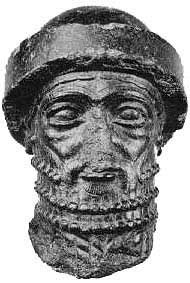 In Chapter 4, lesson 1 we will learn about early empires in Mesopotamia and the Code of Hammurabi. It is a great example of a primary source and is one of the oldest deciphered writings in the world and can now we found in the Louvre in Paris, France.
Document-Based Question: What do you think these laws tell you about justice at this time? Look at examples of some of the laws on page 115 of your textbook, or click the link above.
Primary Source: Ancient Proverbs
8 Nov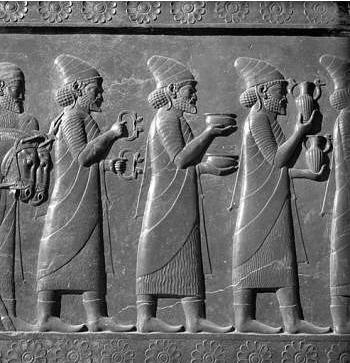
One of the favorite activities for Mesopotamian school students was copying proverbs, or wise sayings (see page 102 in your textbook). Scribes collected and organized hundreds of these popular sayings on tablets. Many are still popular today. Here are a few:
1. Into an open mouth, a fly enters.
2. Friendship lasts a day, kinship lasts forever.
3. Wealth is hard to come by, but poverty lasts forever.
4. If you take the field of an enemy, the enemy will come and take your field.
5. He who leaves the fight unfinished is not at peace.
6. Tell a lie; then if you tell the truth, it will be deemed a lie.
7. Fear the goat from the front, the horse from the rear and man from all sides.
8. The traveler from distant places is an everlasting liar.
9. The rich would have to eat money, if the poor did not provide food.
10. Tell me your friends, and I’ll tell you who you are.
In the comment section, write down the number of the proverb (#1-10) and tell me what you think it means. Proverbs are very famous and come from all over the world, and many are similar in meaning. Good luck!
Writing in Mesopotamia – Cuneiform
7 NovTheo Van Den Hout, a professor of Hittite and Anatolian Languages, tells us about scribes in Mesopotamia and Anatolia. This short video was made for the Oriental Institute Museum special exhibit “Visible Language: Inventions of Writing in the Ancient Middle East.” In Chapter 3, you will learn about scribes, the people who specialized in writing, the stylus, which is the instrument they used to write on clay tablets, and cuneiform, the wedge-shaped writing. Tell me what you think about it in the comment section. Read more about the development of writing and pictograms on the British Museum’s website on Mesopotamia.
Traits of a Civilization
6 Nov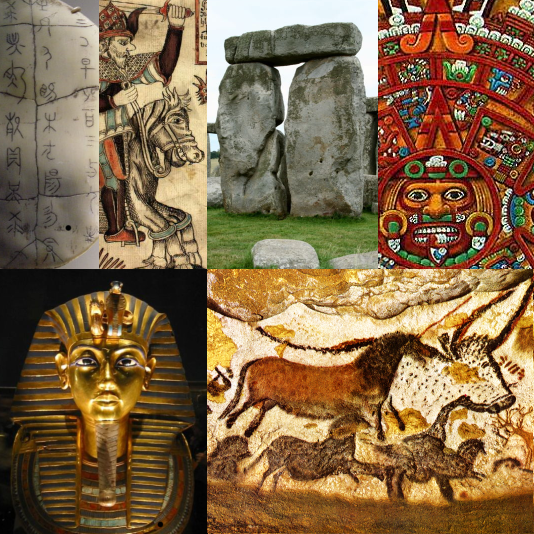
Some students have created nice Google presentations of displaying the traits of a civilization. Two nice examples from Mr. Martin and Ms. Jaya’s class are Vinay’s, Mara’s and Jina’s presentations. A nice example from Mrs. Hall’s and Ms. Jaya’s class is Arya’s presentation. Here is another example from a good website for ancient history.
Mesopotamia – Geography and Sumer
4 Nov 
 Ziggurat
Ziggurat
In Chapter 3, lessons 1 and 2 we have learned about the geography of Mesopotamia, the traits of a civilization and Sumer, the first civilization in Mesopotamia. The British Museum has an excellent website with some good links where you can learn more about these things. Check out the links below:
Ziggurats – click the story, explore, and challenge links for for online games or activities.
Geography – click the story, explore, and challenge links.
Ancient Mesopotamia
21 Oct
Last week, we introduced our second unit, Ancient Mesopotamia (Chapter 3). These two videos provide good reinforcement on what we have been learning in class and reading in our textbook. Check them out!
What is Irrigation?
3 Oct
Here are two videos on the history of irrigation in the Middle East region. They will help you to understand what this term means and how it changed farming.
 Out of Eden Walk

- An error has occurred; the feed is probably down. Try again later.
Visitors since 9/27/13

This work is licensed under a Creative Commons Attribution-NonCommercial-ShareAlike 4.0 International License.
 Linking to Thinking
Recent Comments